
Win More Work


.svg)


.avif)

A Partner, Not Just a Platform
We design the solution around you. Other vendors require you to work around their software. Our commitment is to your success.
Fully Managed Solution
ikaun designs, configures, and deploys your environment, fully tailored to your operating model and business needs. White-glove service from day one.
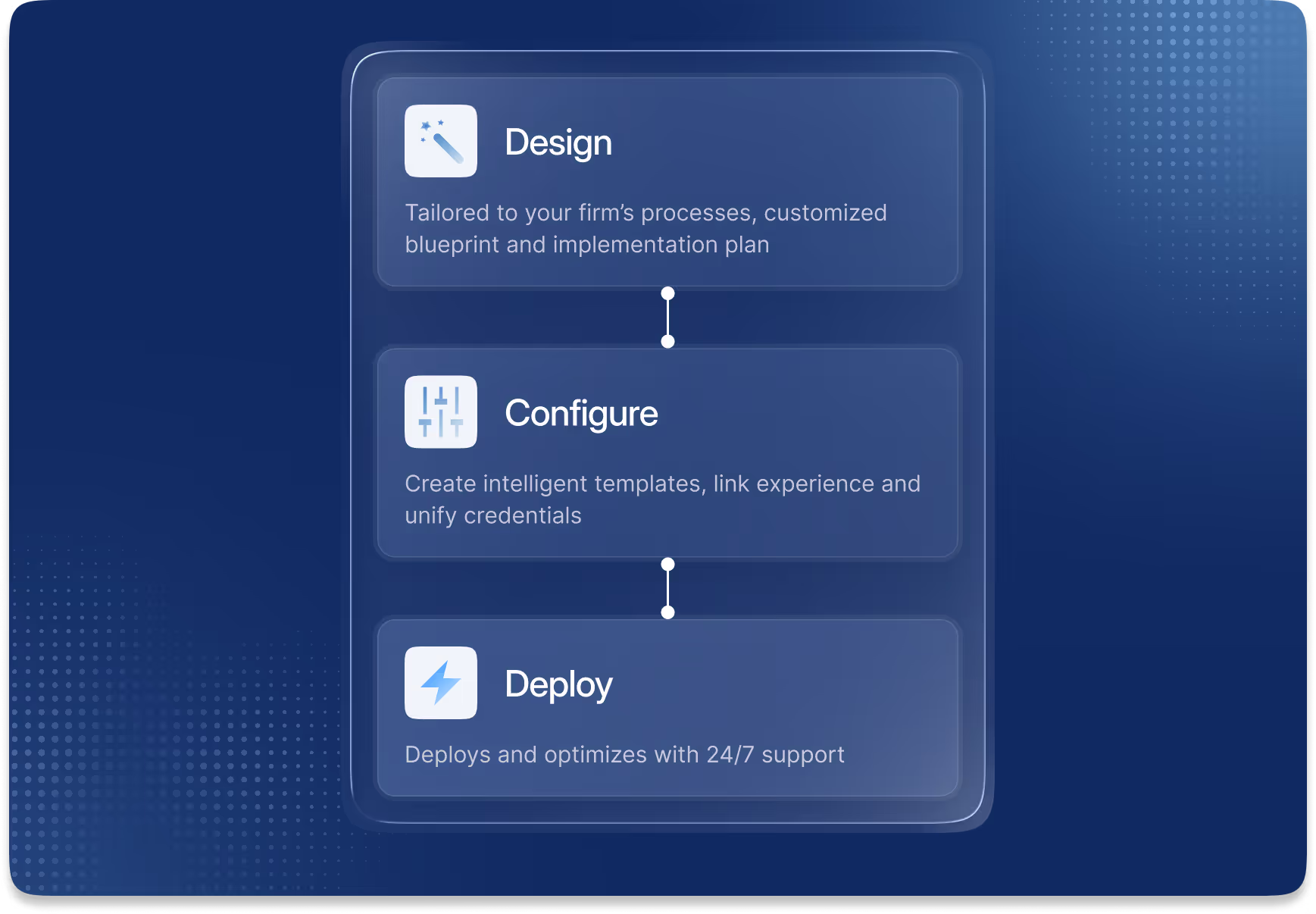
Purpose-Built for Legal & AEC
Not horizontal RFP software retrofitted for your industry. ikaun was built from the ground up for firms where complexity, compliance, and credentialing matter. Your application looks like yours because it is
Firmwide, All-Inclusive Licensing
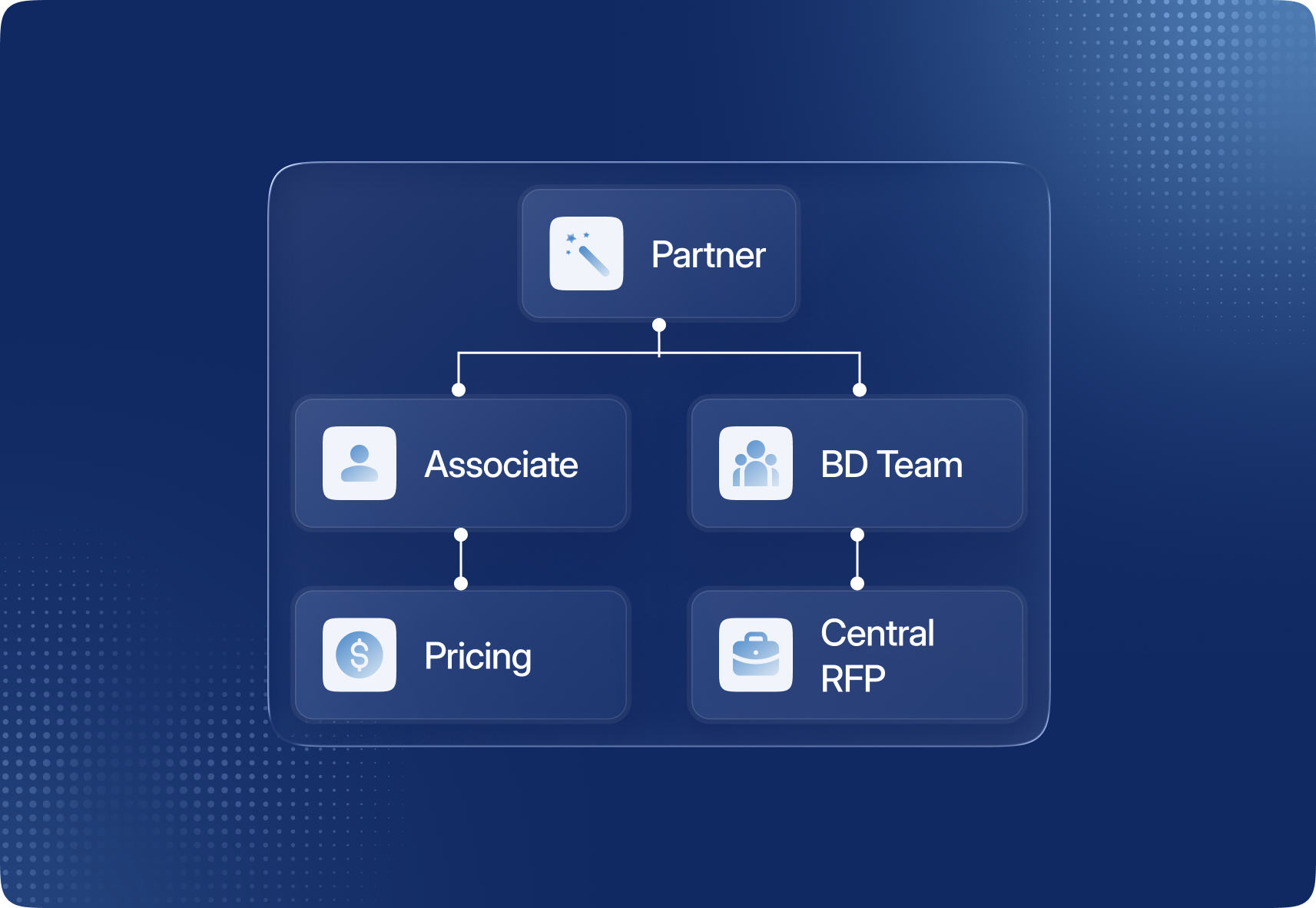
Everyone at your firm gets access — partners, associates, pricing teams, business development, secretaries. No per-seat pricing surprises. No nickel-and-diming.
.png)
Prove Value From Day One
ikaun is designed to deliver value early, not after a long implementation. From the start of every engagement, we focus on getting your team live, aligned, and seeing real results in your environment.
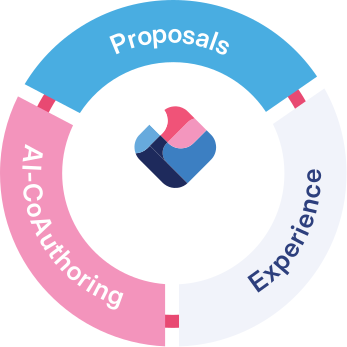
A Smarter System for Proposals
We design the solution around you. Other vendors require you to work around their software. Our commitment is to your success.
Smart, Adaptive Templates
Templates that auto-configure to client, matter type, and jurisdictional requirements. Every proposal starts from the right foundation.
Automated Formatting & Compliance
Built-in compliance checking ensures submissions meet all formatting and content requirements. Fewer review cycles, no last-minute scrambles.
Modular Content Blocks
Reusable, pre-approved content blocks enable speed without sacrificing quality. Assemble winning proposals in a fraction of the time.
.avif)
Proposal Generation at Speed
Produce fully compliant proposals in hours, not days. AI handles the heavy lifting so your team can focus on strategy and differentiation.
Intelligent Agent System
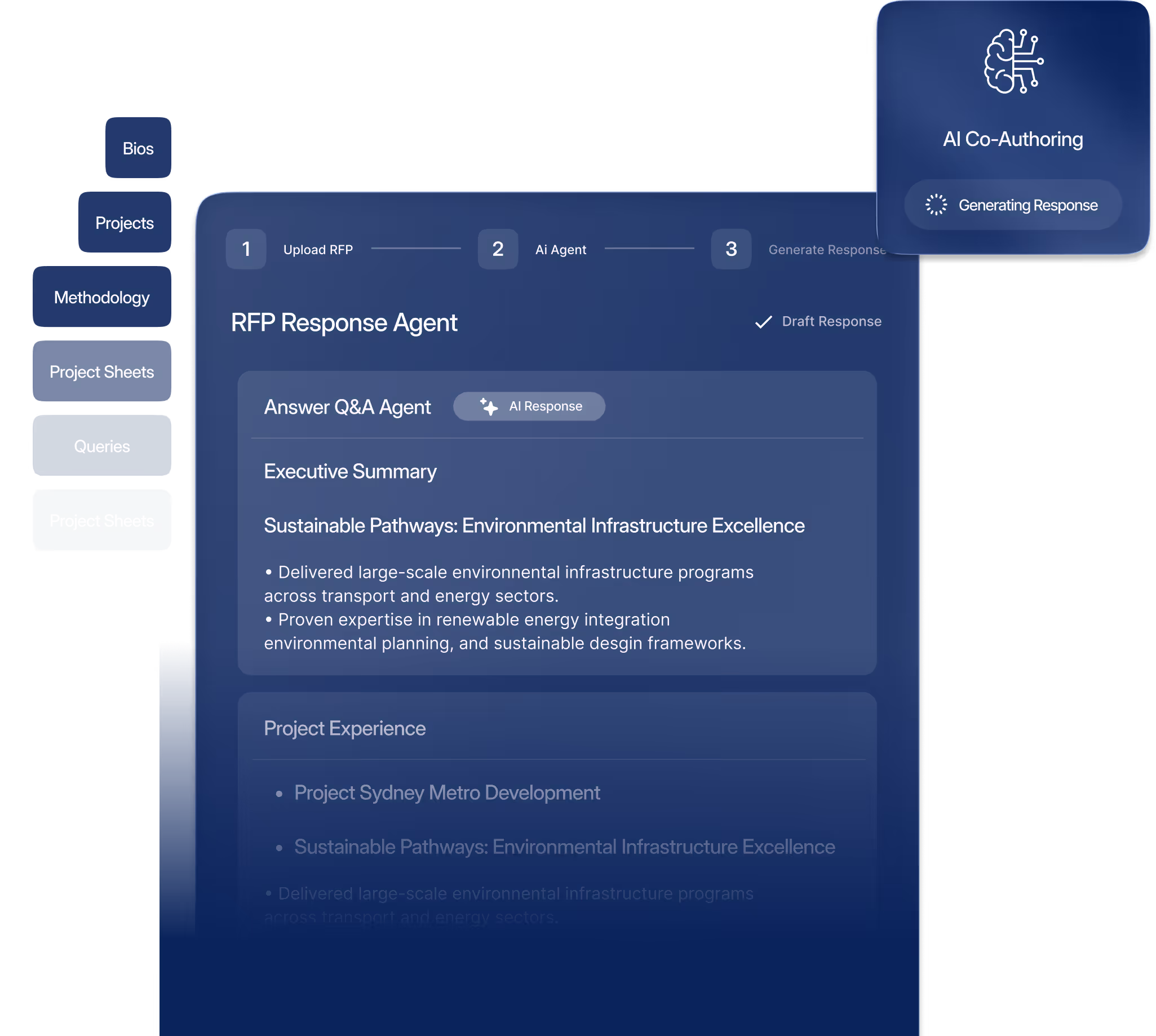
Automated agents pull and populate bios, project sheets, and methodology content with precision. Consistent quality across every submission.
Natural Language Search
Ask questions in plain language and surface the right firm knowledge instantly. No Boolean queries, no expert training required.
Centralized Knowledge Repository
A single, searchable hub for people, projects, and expertise across your entire firm. Find the right credentials and experience in seconds, not hours.
Real-Time System Integration
Connects directly to your financial and ERP systems to keep data current and accurate. No manual updates, no stale content at proposal time. ikaun integrates with existing experience management systems. It doesn’t replace
them.
Automated Content Governance
Built-in workflows ensure experience records stay fresh and compliant. Your content is always ready when a deadline hits.

Built for Your Industry
We design the solution around you. Other vendors require you to work around their software. Our commitment is to your success.

Win More Pitches, Faster
.svg)
.svg)



Compete at Scale, With Confidence
.svg)

Blogs
We design the solution around you. Other vendors require you to work around their software. Our commitment is to your success.


Trusted by the World's Leading Firms
We design the solution around you. Other vendors require you to work around their software. Our commitment is to your success.
This was about selecting a platform that could scale with the firm and deliver measurable results from day one. ikaun has done exactly that by enhancing efficiency, improving consistency, and strengthening how we support business development across our 50-state platform.


Our experience with ikaun has been a game-changer for how we approach business development and client engagement.

.svg)
ikaun also allows us to leverage AI by building from a centralized library of approved responses and tailoring them to each opportunity. Brittany led a thoughtful evaluation and implementation process in partnership with the ikaun team, which has been instrumental in the success we're seeing today.
The ability to streamline RFP responses while maintaining quality and consistency has been transformative for our team.

.svg)
Our goal wasn't just to speed up proposals—it was to free our teams from repetitive work and let them focus on winning work that matters.

.svg)
Put simply, pulling proposals from ikaun is amazingly easy and the formatting is just beautiful. It's wonderful when something so necessary works so well. Thank you to the ikaun team!


Arup People powered by ikaun has transformed how we operate, making it possible for our teams to connect and collaborate on a truly global scale.

.svg)
Case Studies
We design the solution around you. Other vendors require you to work around their software. Our commitment is to your success.
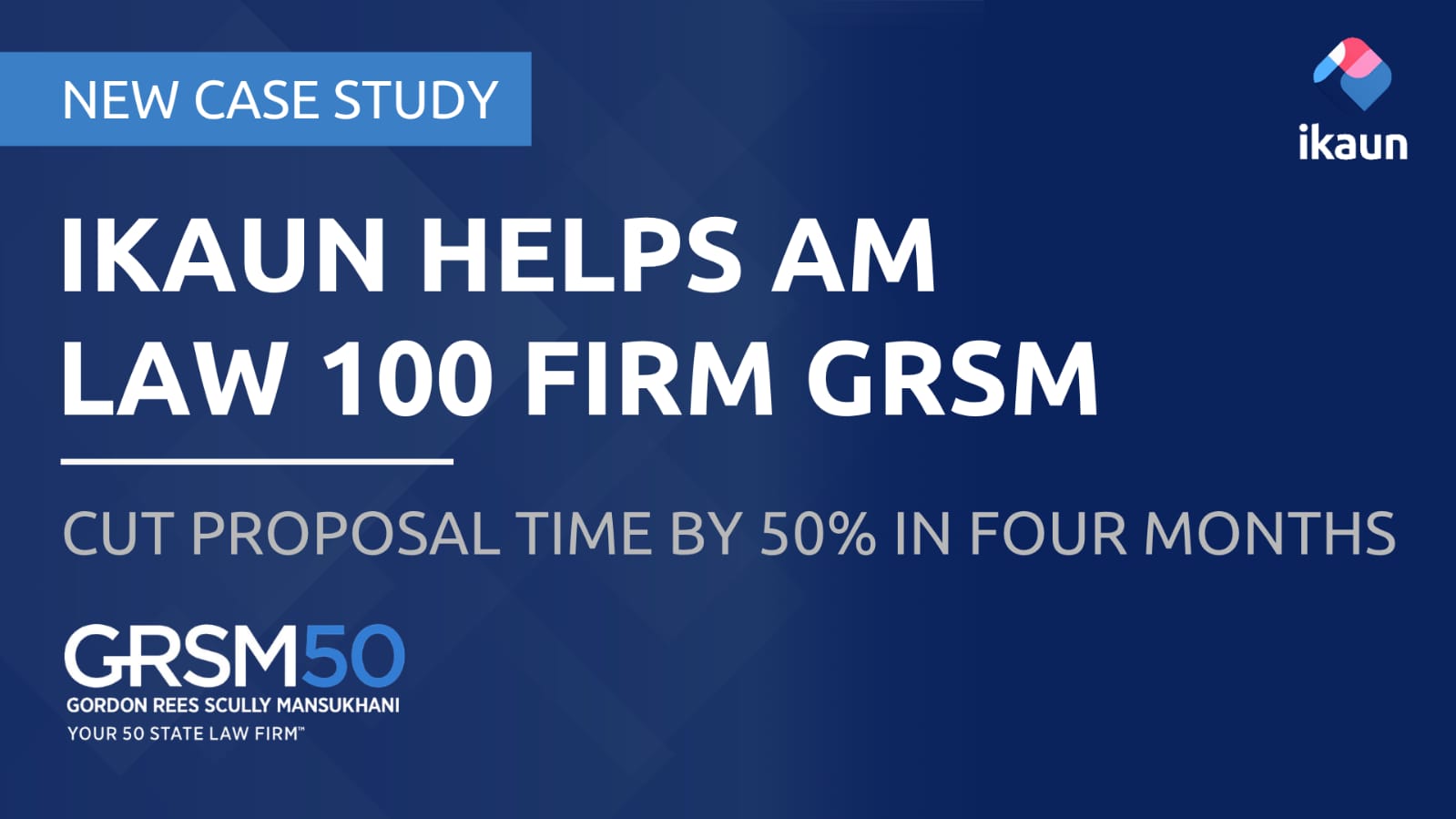
ikaun Helps Am Law 100 Firm GRSM Cut Proposal Time by 50% in Four Months

Leveraging Global Capability through Arup People

Arup is a global design firm with over 18,000 professionals. The firm relies on harnessing its collective, worldwide expertise to solve complex challenges and submit over 10,000 project bids annually.

ikaun Replaces Existing Experience Management to Power Best-in-Class Data Solution for Marketing and BD Teams
A globally recognized law firm with offices in the U.S., London, and Paris. The firm relies heavily on its senior MarTech team to drive data-driven marketing and business development programs, requiring seamless access to experience data to win new business and deliver premier client service.
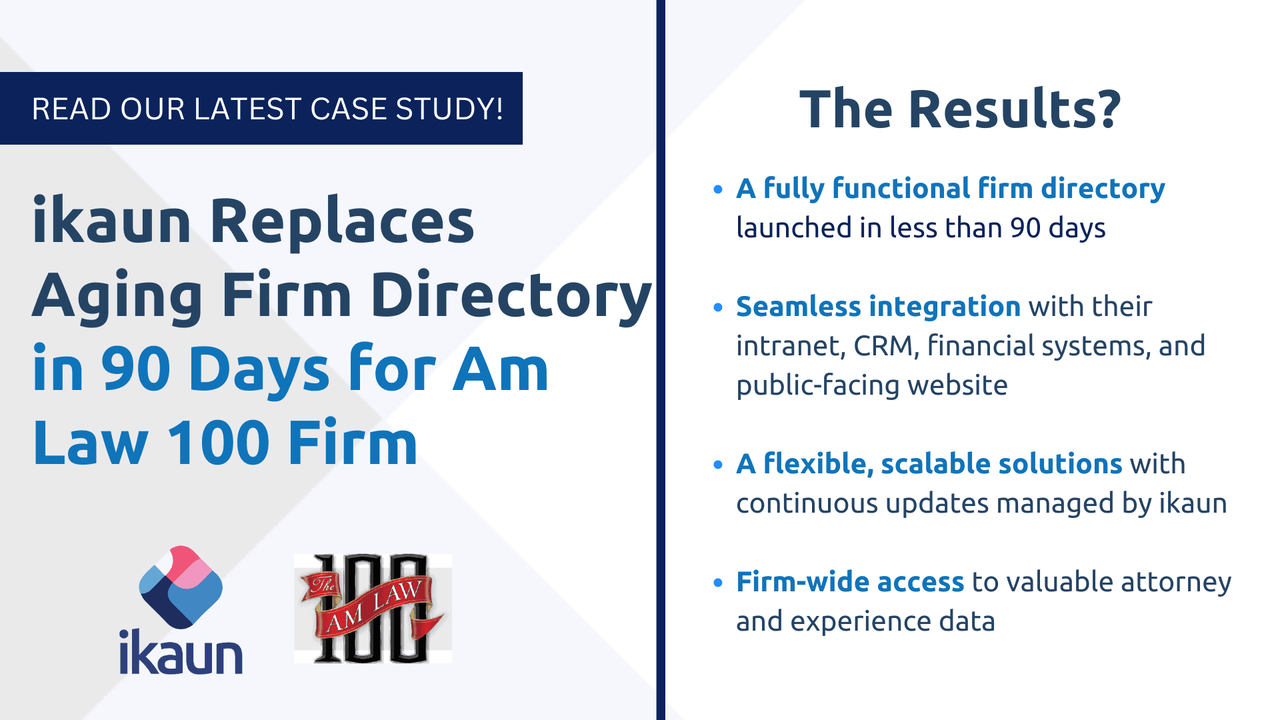
ikaun Replaces Aging Firm Directory in 90 Days for Am Law 100 Firm
An internationally recognized Am Law 100 firm with 460 attorneys across the U.S. and UK, relying heavily on efficient knowledge management and experience discovery to serve its clients.
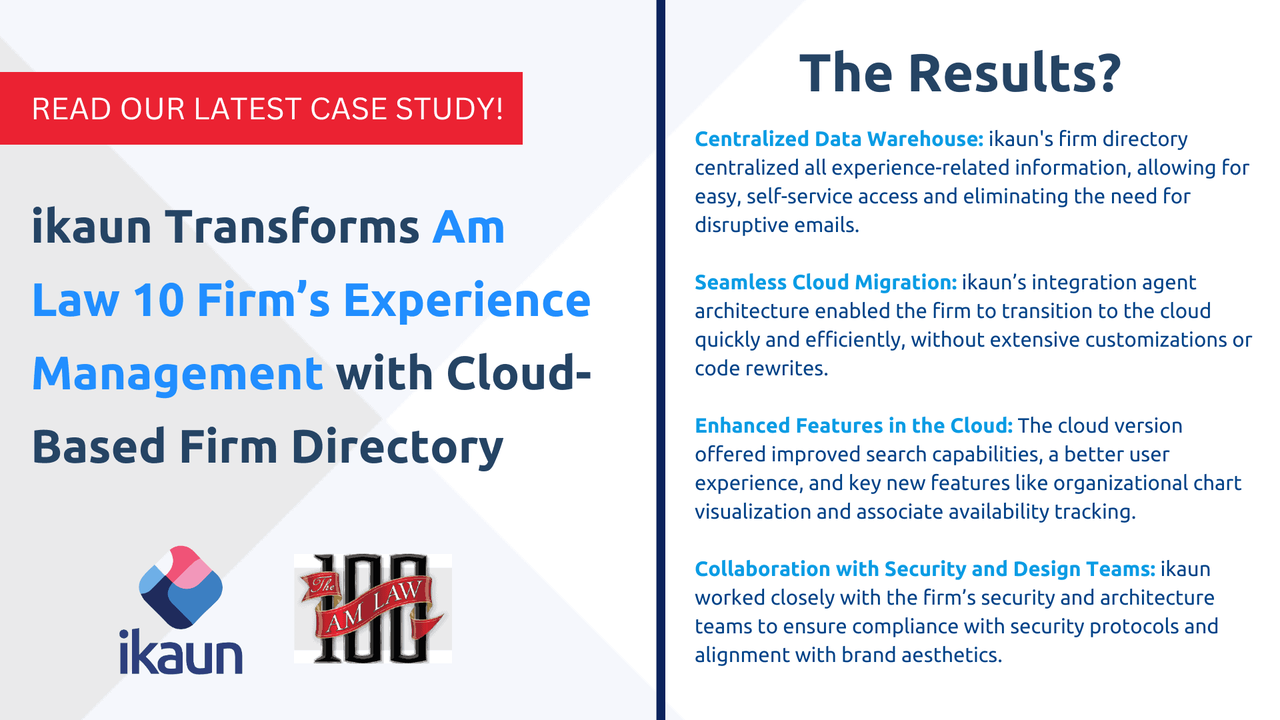
ikaun Seamlessly Implements Cloud-Based Firm Directory and Transforms Experience Search for Am Law 10 Firm
An Am Law 10 firm migrated its ikaun Firm Directory to the cloud, unlocking advanced search, org chart visualizations, and real-time associate availability tracking to instantly match attorneys with billable work.
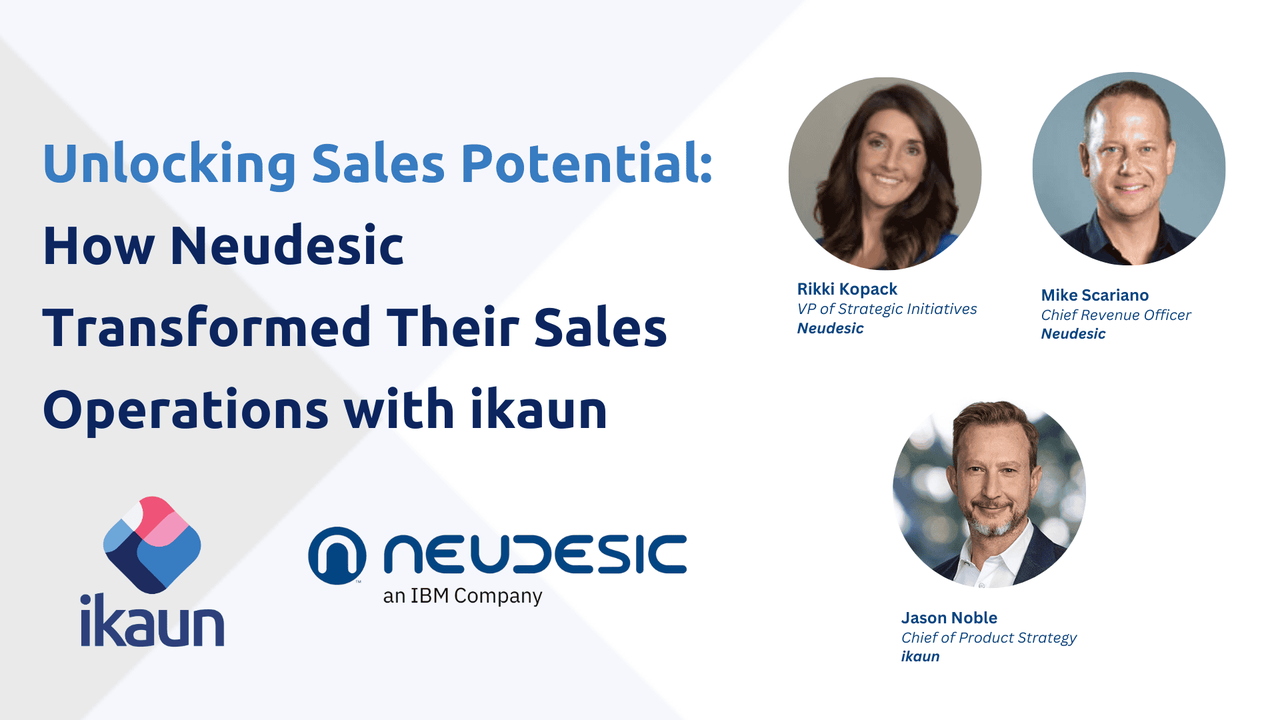
ikaun Transforms Sales Operations and Redefines Efficiencies for Neudesic
Neudesic used ikaun’s AI platform to replace manual resume tracking with automated, perfectly branded document generation, drastically accelerating their global sales cycle.
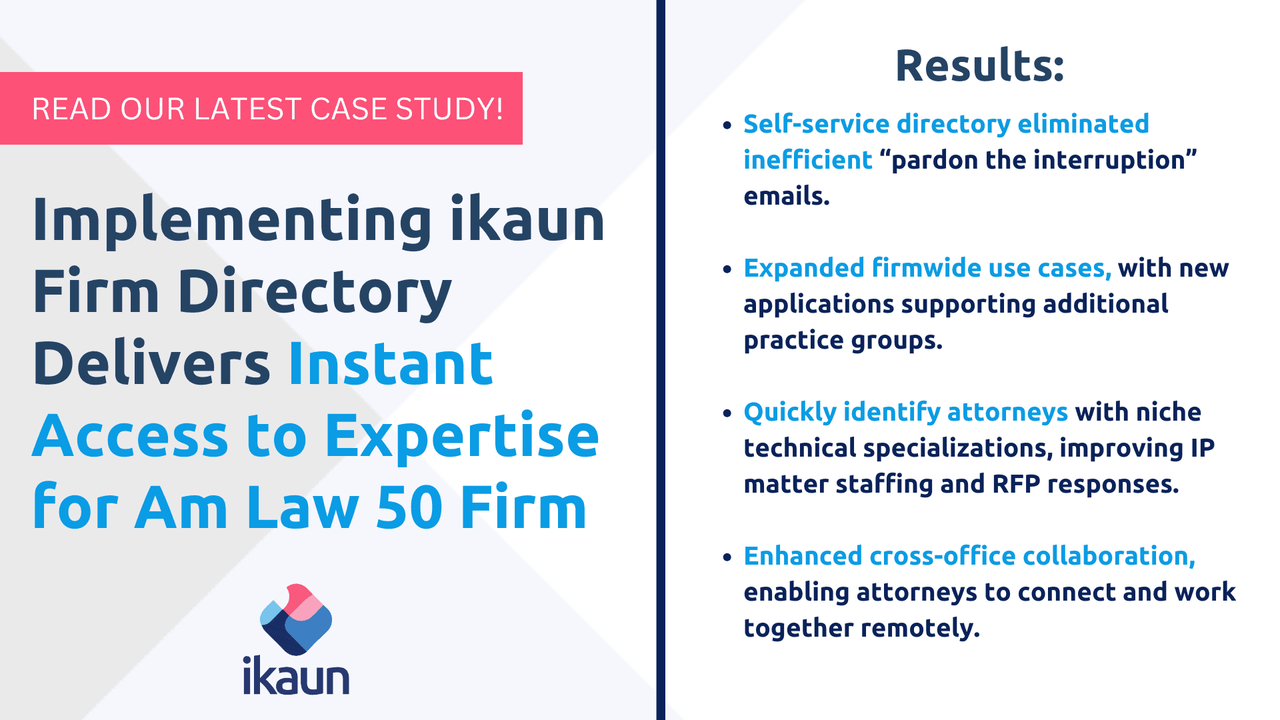
Implementing ikaun Firm Directory Delivers Instant Access to Expertise for Am Law 50 Firm
ikaun is a centralized law firm directory that provides instant access to attorney expertise, streamlining matter staffing and cross-office collaboration.
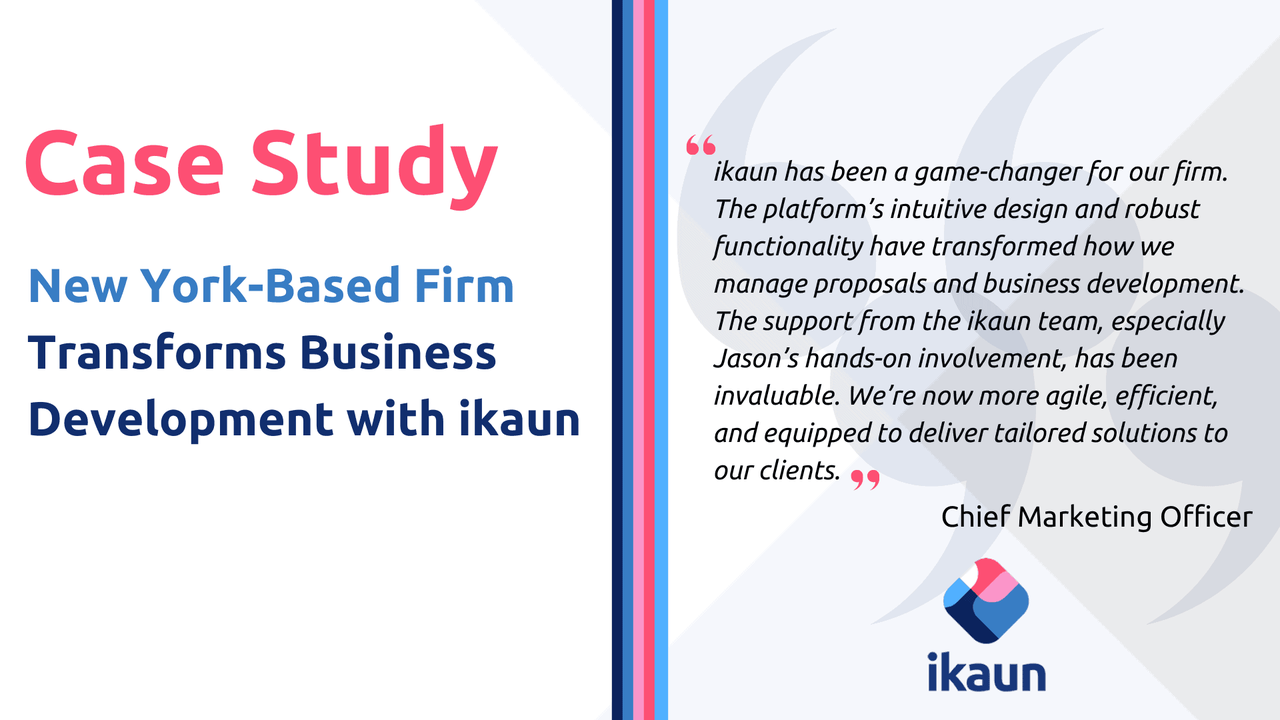
New York-Based Firm Transforms Business Development with ikaun
A New York law firm used ikaun to centralize 33,000+ matters and automate proposal workflows, drastically reducing turnaround times and empowering their team with real-time experience data.
Winning More Time for Strategy: How Stinson is Transforming RFP and Proposal Responses with ikaun
By adopting ikaun to integrate experience and financial data, Stinson LLP automated proposal generation, eliminating manual bottlenecks to quickly deliver strategic client pitches.
ikaun’s Firm Directory Transforms Experience Discovery for Am Law 100 Firm
By deploying ikaun's Firm Directory in under 90 days, a global Am Law 100 firm centralized its scattered data and support assignments, instantly eliminating manual searches and streamlining cross-office workflows.
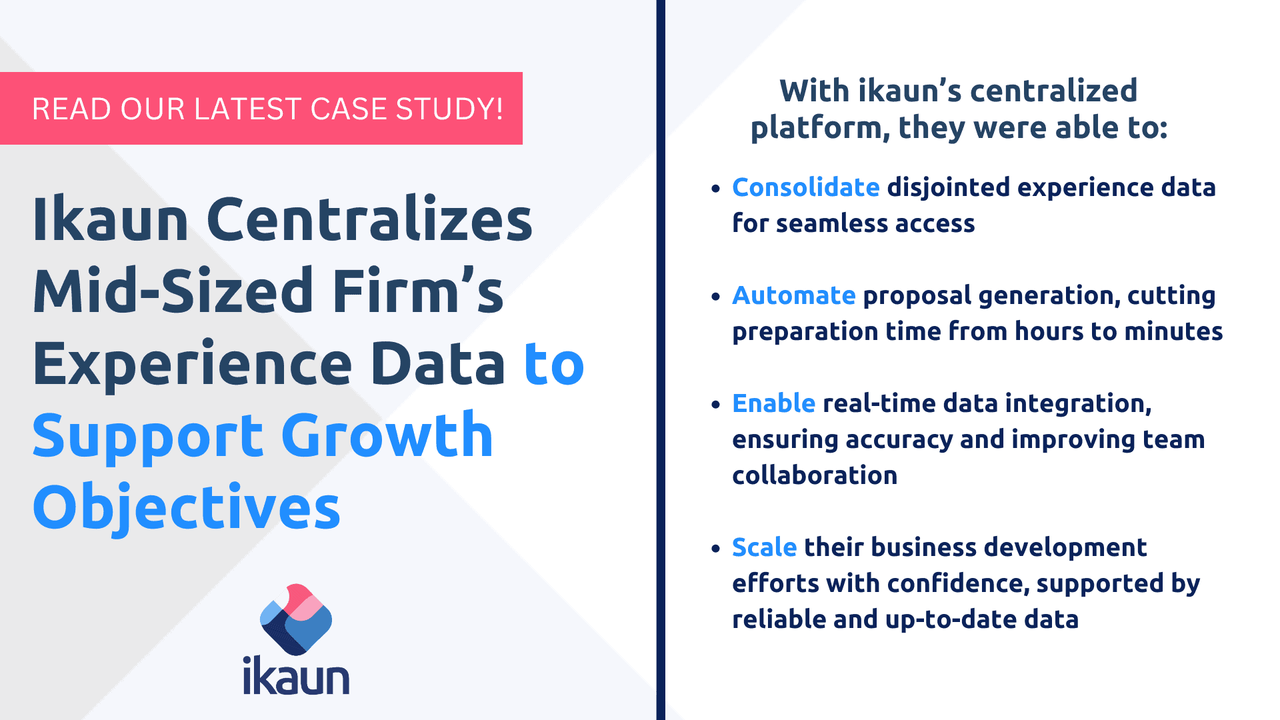
Ikaun Centralizes Mid-Sized Firm’s Experience Data to Support Growth Objectives
A D.C. firm replaced manual spreadsheets with ikaun's centralized platform, cutting proposal creation times from hours to minutes to drive new business.
.svg)
More compelling proposals. More wins. Fully managed, white glove delivery.
